
Guide
Nazaré, up close
Not a list of attractions. This is what we tell guests who arrive and ask what is actually worth it.
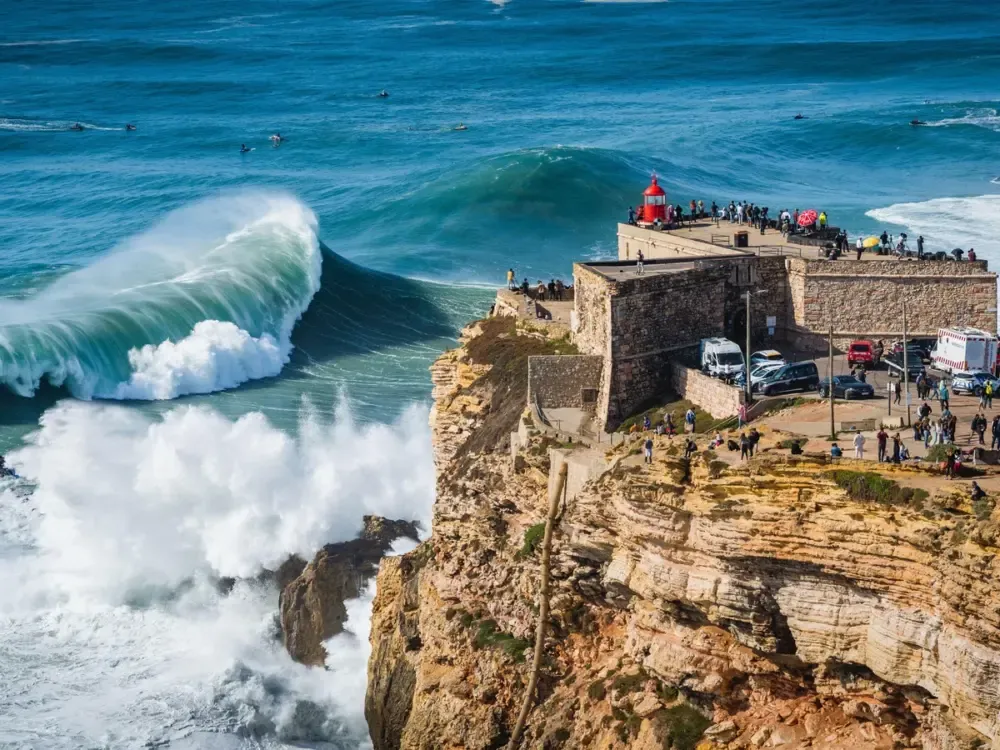
The canyon and the waves
Off Nazaré lies an underwater trench more than five thousand metres deep. It funnels the energy of the Atlantic and releases it all at once against Praia do Norte. That is the scientific explanation for the world big-wave surfing records being broken here.
The season runs from October to March. The best view is from the Fort of São Miguel Arcanjo, right below the lighthouse — bring a windproof jacket, the wind on that headland is something else.
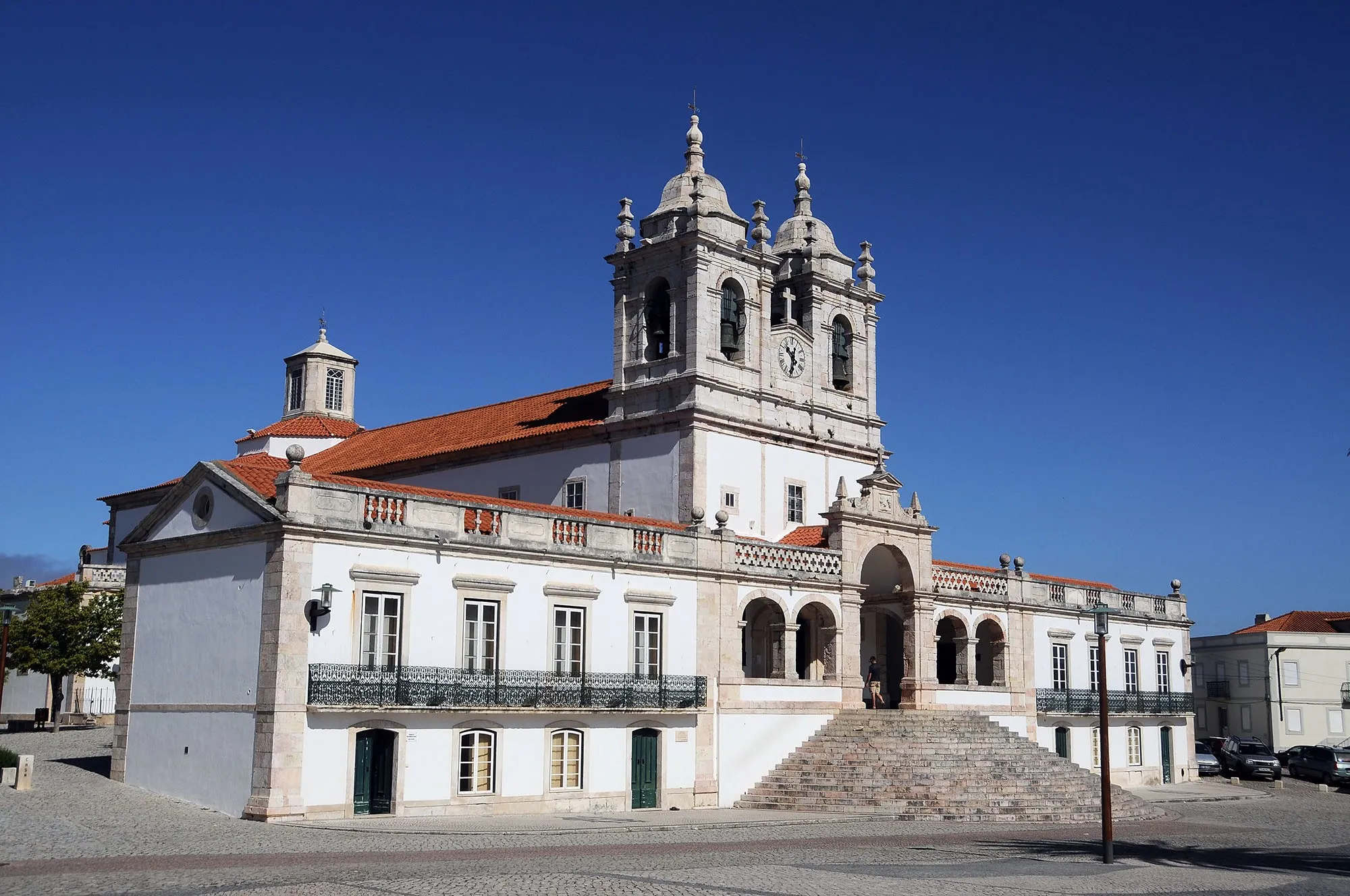
The Sítio, up above
The funicular has been climbing since 1889 and takes three minutes. At the top are the Suberco viewpoint, the Sanctuary of Our Lady of Nazaré, and the Ermida da Memória, with its legend of the knight who reined in his horse at the cliff edge.
It is also where you still see the seven-skirt costume, and where dried fish is sold in the sun on the square.
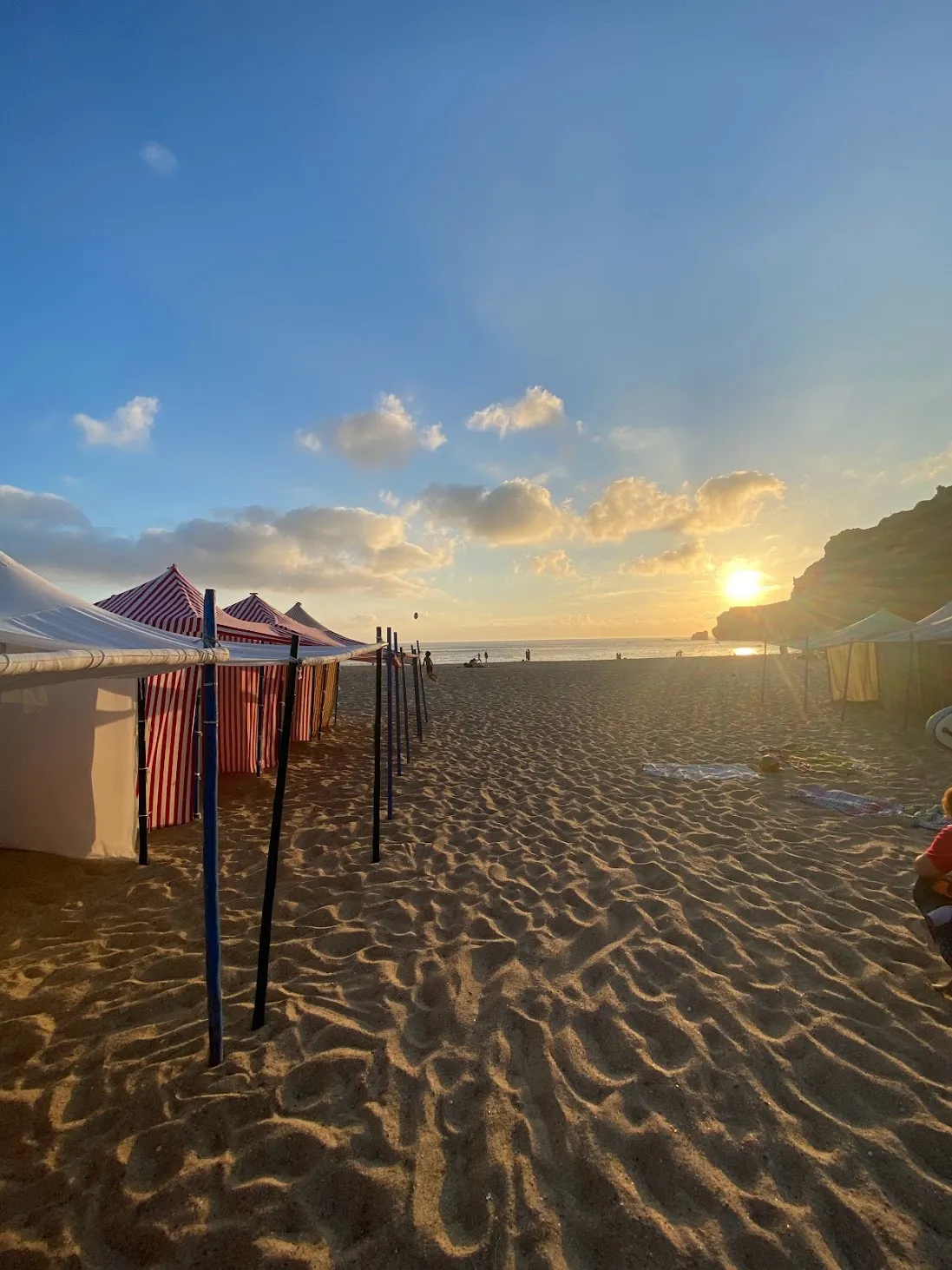
The beach
Praia da Nazaré is vast and sheltered — in summer it fills with striped beach tents, lined up as though someone had measured them with a ruler and set square. Off season it is nearly empty and you can walk two kilometres without passing anyone.
At the end of the day the sun sets straight into the sea. It is the moment everyone stops.
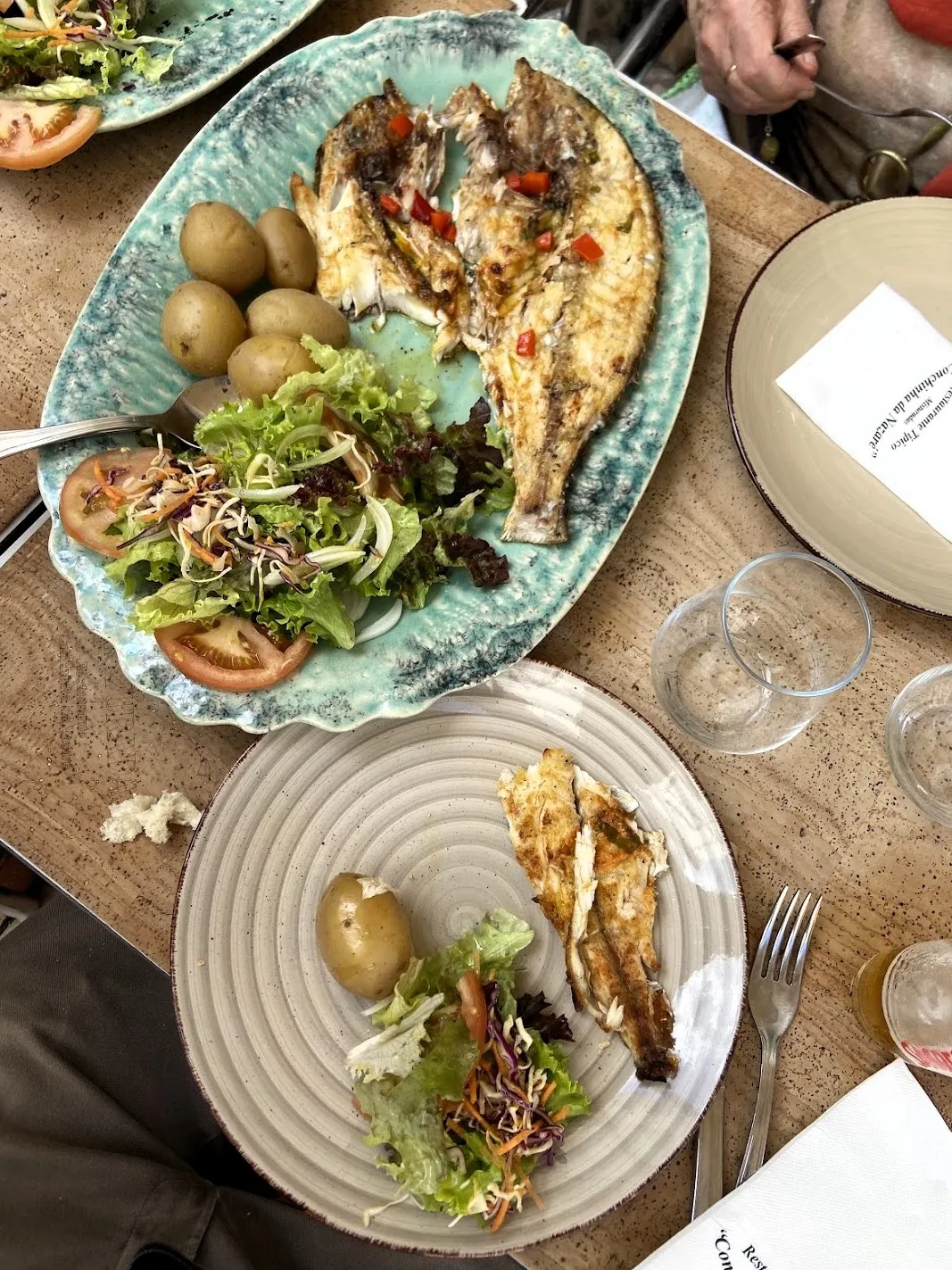
Eating
The town lives on fish. Caldeirada stew, sardines grilled in the street in summer, and the seafood açorda that is the most serious thing on the menu in any old house.
The municipal market opens in the morning and is the right place to buy fish if you plan to cook at the house. Closed on Mondays.
Nearby
Alcobaça Monastery is twenty minutes away and Batalha half an hour — both are World Heritage sites. São Martinho do Porto has a shell-shaped bay, good for anyone travelling with children.
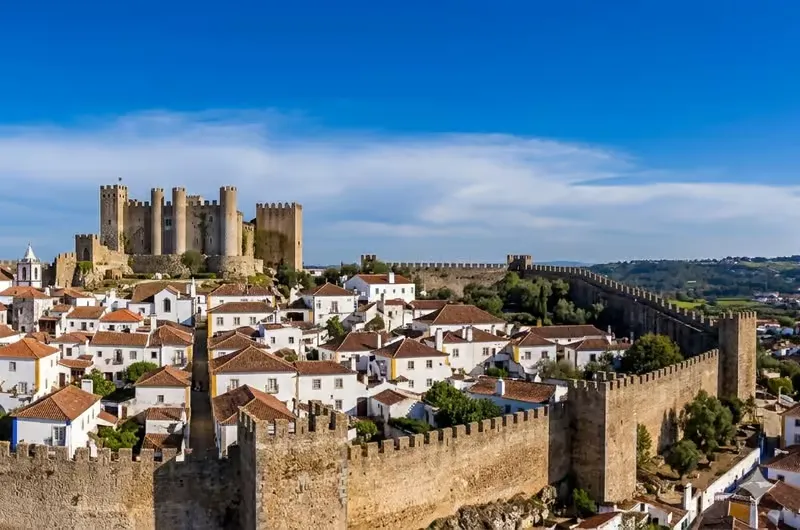
Óbidos, with its walls still complete, is about forty minutes and makes for a well-spent afternoon.